
In UK healthcare environments, barcode scanning is no longer just a retail technology adapted for clinical use. It has become a critical part of patient safety, medication administration and specimen tracking.
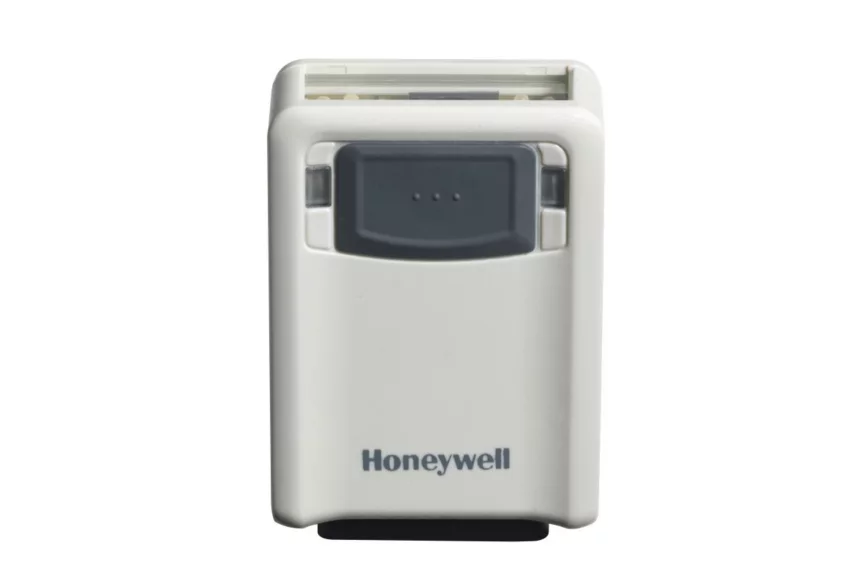
While much attention is given to rugged hospital scanners, smaller clinical environments such as GP surgeries, outpatient clinics and pharmacies often require a more compact solution.
One device that continues to appear in these environments is the Honeywell Vuquest 3320g.
Let’s look at why.
The Realities of Scanning in Healthcare
Unlike retail counters, healthcare workstations are:
- Space-restricted
- Shared by multiple clinicians
- Frequently disinfected
- Used for scanning both printed labels and mobile screens
- Subject to infection control protocols
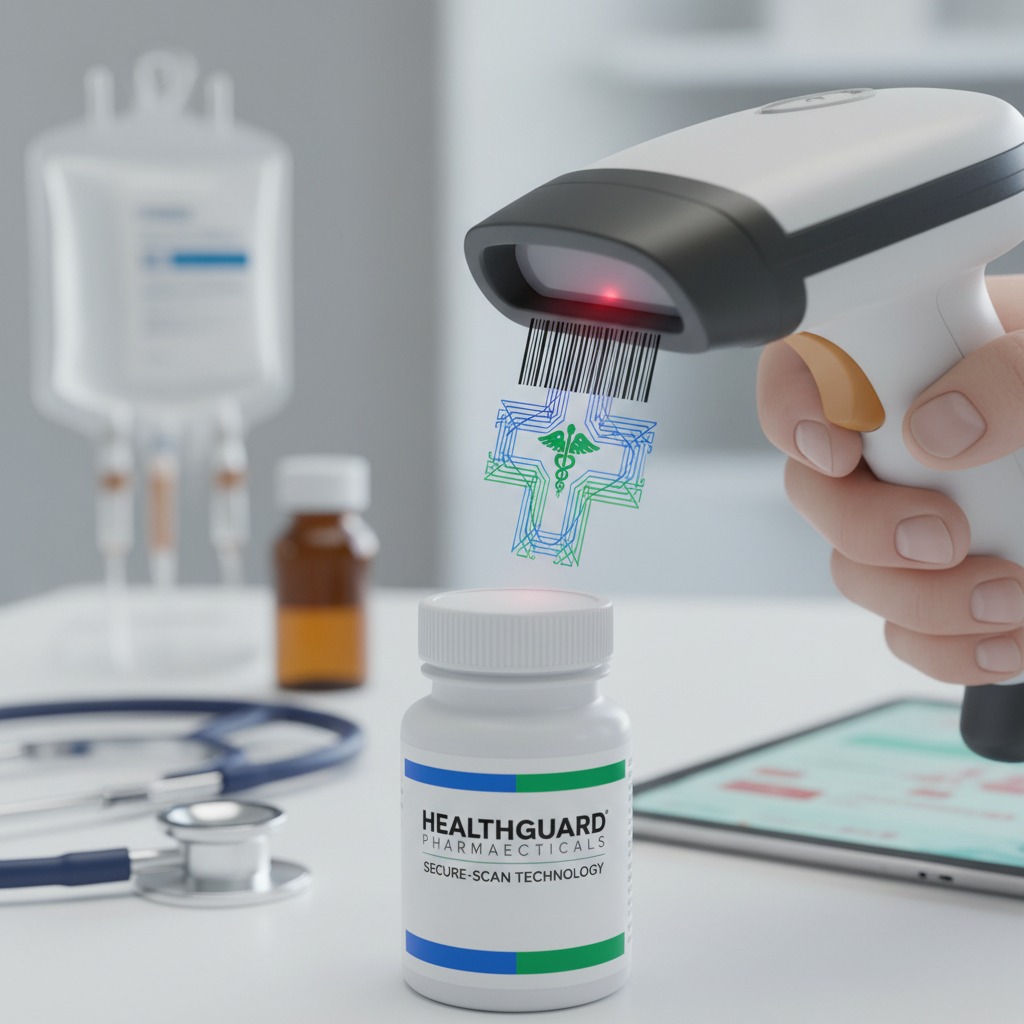
In many NHS and private healthcare settings, barcode scanners are used for:
- Patient wristband identification
- Medication verification
- Sample labelling
- Inventory management
- GS1 barcode compliance
This means the scanner must balance accuracy, reliability and practicality.
Why Form Factor Matters in Clinical Areas
Large handheld scanners can be excessive in smaller clinical rooms. The compact footprint of the 3320g makes it suitable for:
- Reception desks
- Pharmacy counters
- Laboratory intake areas
- Mobile workstation carts
Its small base and light housing allow it to integrate without dominating the workspace.
In healthcare, subtle integration matters more than in retail.
Reading Performance in Medical Workflows
Modern healthcare labelling increasingly uses 2D barcodes such as:
- DataMatrix
- QR codes
- GS1 Digital Link
The Honeywell Vuquest 3320g supports both 1D and 2D scanning, including:
- High-density codes
- Small medication labels
- Barcodes displayed on mobile devices
- Slightly damaged or low-contrast prints
For environments transitioning toward GS1 standards, 2D capability is no longer optional.
Hygiene & Infection Control Considerations
Healthcare hardware must tolerate frequent cleaning with disinfectants.
The light grey housing of the 3320g makes it visually suitable for clinical environments, and its smooth surfaces make it easier to wipe down compared to heavily textured industrial devices.
While not a fully disinfectant-ready medical scanner, it can be appropriate for:
- GP surgeries
- Private clinics
- Community healthcare settings
Where ultra-rugged hospital-grade scanners may not be necessary.
When Is a Compact Scanner the Right Choice?
The 3320g may be suitable where:
✔ Space is limited
✔ Scanning volume is moderate
✔ 2D barcodes are required
✔ Budget constraints exist
✔ A balance between performance and size is needed
It may not be ideal for high-intensity ward environments or heavy drop risk scenarios — but for controlled clinical spaces, it remains a practical option.
The Bigger Picture: Barcode Scanning & Patient Safety
Barcode scanning is directly linked to reducing medication errors and improving traceability.
As NHS trusts and private providers continue to strengthen digital workflows, selecting the correct hardware — not just the most rugged device — becomes part of the operational decision-making process.
In smaller healthcare environments, compact imaging scanners like the Honeywell Vuquest 3320g continue to play a quiet but important role.
Final Thoughts
Not every healthcare environment requires the most advanced hospital-grade scanner. Sometimes the right solution is the one that integrates seamlessly into daily workflows without adding complexity.
For GP surgeries, pharmacies and outpatient settings across the UK, compact 2D imaging scanners remain a practical and cost-effective choice.